HACCP in a bakery in Poland: Sanepid requirements step by step
What a bakery in Poland must have before it bakes its first loaf for sale: registration with Sanepid (the Polish sanitary inspection), premises, staff medical certificates, a HACCP plan tailored to bread, acrylamide and deliveries to shops. With the legal basis.
HACCP in a bakery is a procedure, not a certificate
Every business that produces food for sale must have a permanent procedure based on the HACCP principles, as Article 5 of Regulation (EC) No 852/2004 says.[1] A bakery is no exception, but there are no separate “bakery” HACCP rules either. The same set applies as in a pastry shop or a restaurant: Regulation 852/2004 and the Polish act on food and nutrition safety.[2] The Polish Sanitary Inspection points out that small businesses may use simplified procedures and that the law does not require the system to be certified.[3] The difference between a bakery and a pastry shop lies elsewhere: in the type of hazards, the night shift, deliveries to shops and acrylamide, which pastry shops think about less often.
- the basis: Article 5 of Regulation 852/2004, a procedure based on HACCP principles[1]
- Polish rules: the Act of 25 August 2006 on food and nutrition safety[2]
- a HACCP certificate is not mandatory, and a small business may simplify its procedures[3]
- an inspection checks whether the system works in practice, not whether the binder is thick
Step 1: apply to Sanepid at least 14 days before you start
Before you sell your first loaf, the bakery must be approved and entered in the register of establishments kept by the State District Sanitary Inspector competent for the location of the business (Articles 61-63 of the Polish act).[2] The application for approval and registration is filed in writing, at least 14 days before the planned start of operations (Article 64(1)).[2] In the application you give the company details (including the NIP, the Polish tax ID, and REGON, if you have one), the type and scope of activity, the type of food and the location of the premises (Article 64(2)). Any later change of details must be reported within 30 days (Article 64(1a)).
Design first, build second
It is worth showing the room layout to Sanepid before you spend money on partition walls and tiles. Rebuilding after approval is refused costs more than a visit with a floor plan. We describe how it went for us in HACCP in a small pastry shop without the paperwork.
- authority: the State District Sanitary Inspector competent for the registered office or place of business[2]
- deadline: the application at least 14 days before you start[2]
- you can start only after approval or conditional approval (Article 63(1))[2]
- change of registered details: an application within 30 days of the change[2]
Which rooms a bakery needs
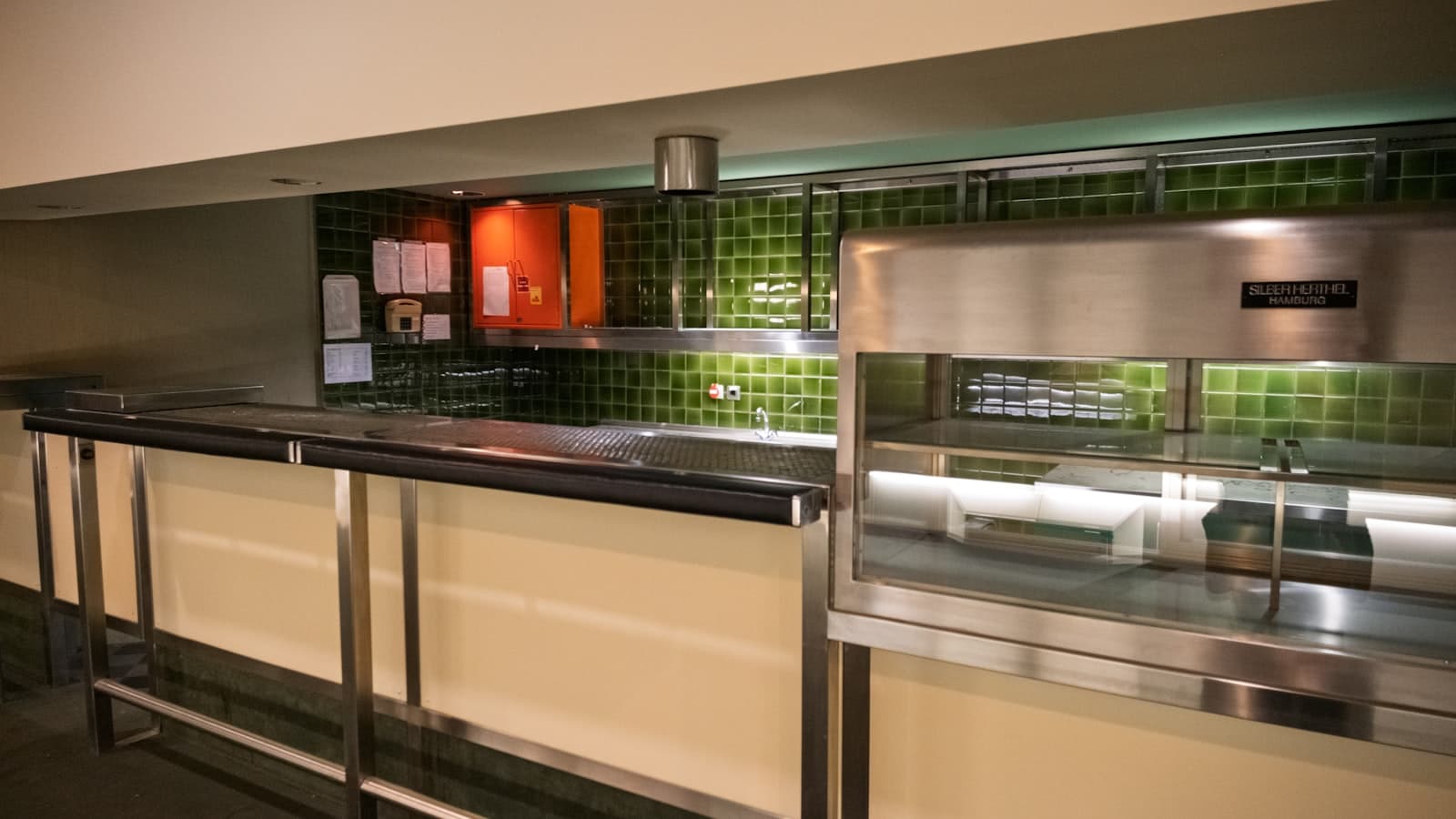
The rules do not give a floor area or a closed list of rooms. Instead, Annex II to Regulation 852/2004 describes the conditions the premises must meet, and the inspector assesses them at approval.[1] In a bakery the most important thing is separating the routes: flour and raw ingredients come in on one side, finished bread goes out on the other, and waste and dirty crates do not cross production. On top of that there is flour dust, so ventilation and easy-to-clean surfaces matter more here than in a small pastry shop.
- an adequate number of flush toilets that do not open directly onto food rooms[1]
- hand washbasins with hot and cold running water, used only for hands[1]
- natural or mechanical ventilation suitable for the rooms[1]
- changing facilities for staff where needed[1]
- floors and walls in good condition and easy to clean, ceilings that do not collect dirt[1]
- equipment in contact with food effectively cleaned and disinfected where necessary[1]
- a separate storeroom for flour and raw ingredients, away from waste and cleaning products
Staff: medical certificates and training
The Polish act requires two documents for people who work with food. The first is a medical certificate for sanitary and epidemiological purposes (Article 59(2)).[2] The second is records of hygiene training or instruction, and for people responsible for HACCP also training in the HACCP principles (Article 59(3), in connection with Chapter XII of Annex II to Regulation 852/2004).[2][1] You keep the certificates and training records in the personnel files, and copies must be at the person's workplace (Article 59(4) and (5)).[2] In a bakery with a night shift and stand-in helpers it is easy for someone to bake without a certificate, and that is the first thing an inspector asks about.
The seven HACCP principles applied to bread
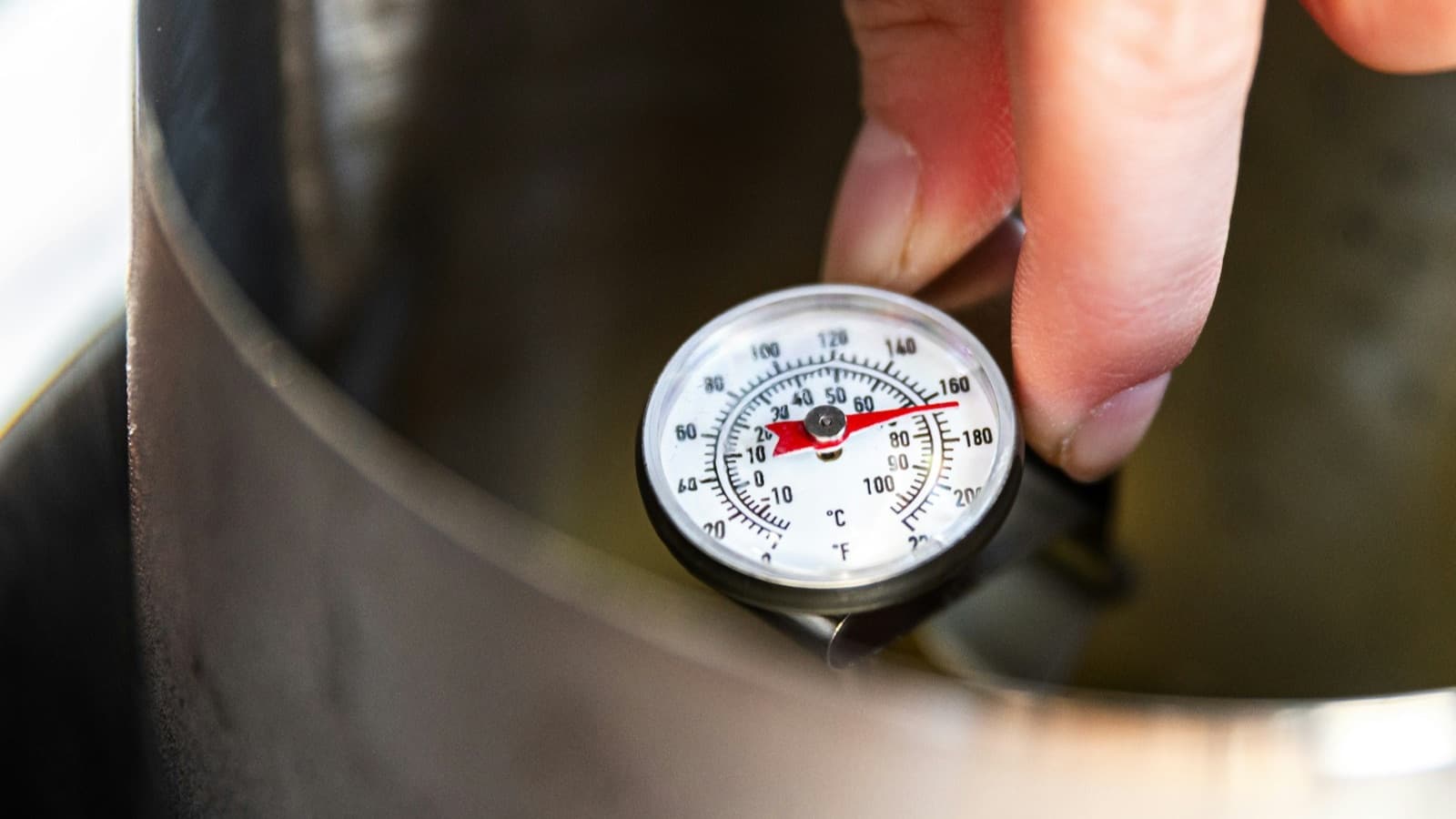
The system is based on seven principles: hazard analysis, critical control points, critical limits, monitoring, corrective actions, verification and documentation.[4] In a bakery this list translates into a few specific questions. What can get into the flour (pests, foreign bodies)? Where in the process is a hazard really decided, for example with fillings that are kept chilled after baking? What limit do you set (fridge temperature, cooling time before slicing and packing)? Who records it, when and where? What do you do when a reading is out of range?
- 1. Hazard analysis: biological, chemical, physical and allergen hazards at every stage, from flour delivery to delivery to shops
- 2. Critical control points: the stages where a hazard is really decided
- 3. Critical limits: specific values, for example the fridge temperature range
- 4. Monitoring: measurement and records at set times
- 5. Corrective actions: what you do after a limit is exceeded
- 6. Verification: whether the system works, checked periodically and after every change in production
- 7. Documentation: records that confirm it
Typical hazards and control points in a bakery
Which stages are critical control points follows from the hazard analysis for your business, you cannot copy it from someone else's documentation. The table below shows the places that usually need attention in bakeries. Treat it as a starting point for a conversation with the person preparing your HACCP plan, not as a ready-made plan.
| Stage | Hazard | How to control it |
|---|---|---|
| Receiving flour and raw ingredients | pests, damaged packaging, foreign bodies | delivery check and goods-in record |
| Flour storage | pests, moisture | storeroom inspection, pest control |
| Weighing and mixing | foreign bodies, allergen mix-ups (sesame, nuts, milk) | sifting flour, production order, a recipe with an allergen list |
| Fillings and products with cheese or cream | microbial growth | chilled storage, fridge temperature log |
| Baking | underbaking, too dark a bake (acrylamide) | set time and temperature for each product, color check |
| Cooling, slicing, packing | mold, contamination from the slicer | cooling before packing, cleaning the slicer according to the schedule |
| Delivery to shops | dirty crates and vehicle, broken cold chain for filled products | vehicle cleaning log, temperatures in the vehicle's cold compartment |
Acrylamide: the obligation bakeries forget
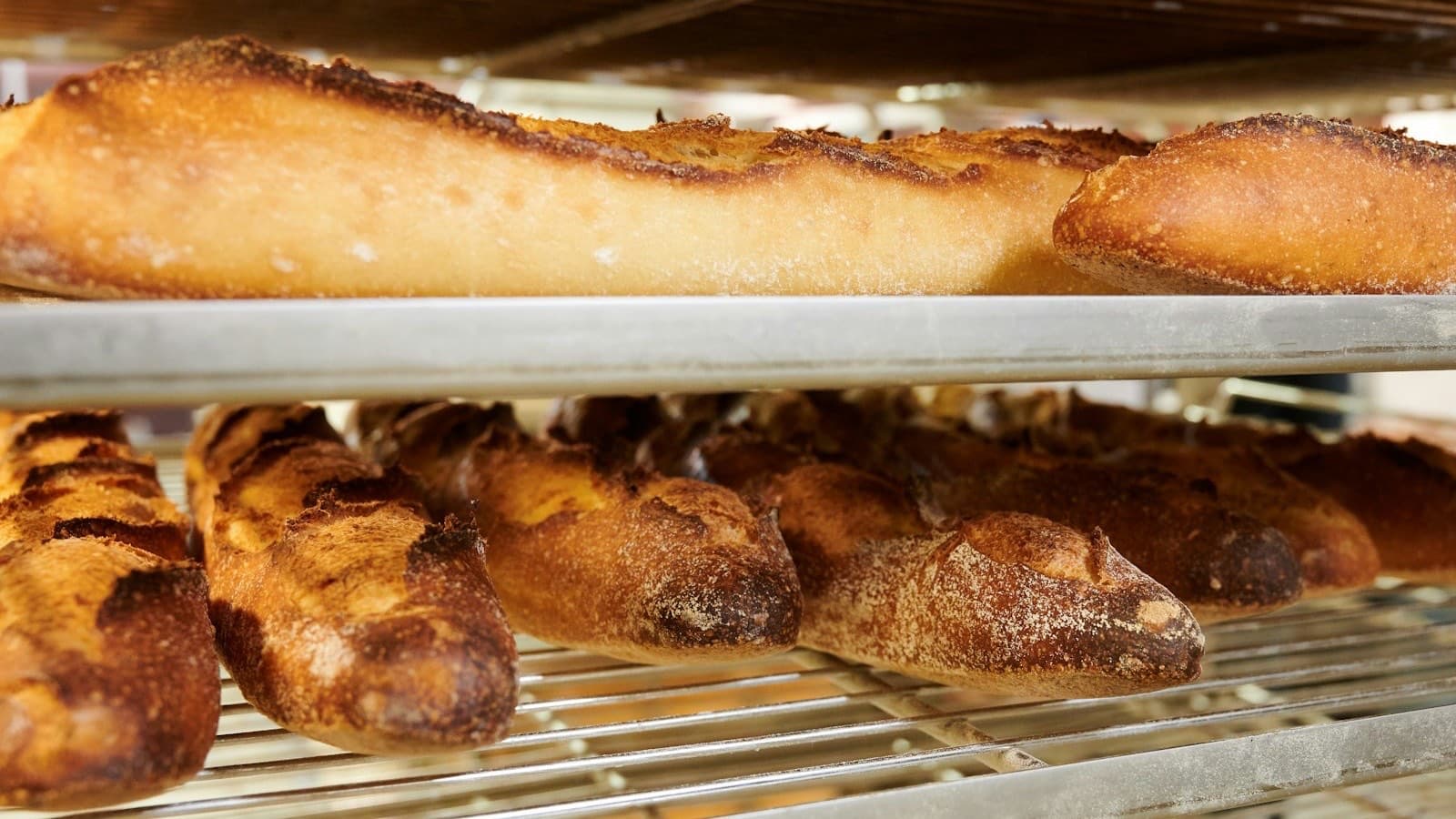
Bread and baked goods are on the list of products covered by Commission Regulation (EU) 2017/2158 on reducing acrylamide in food.[5] A business that sells at retail or supplies only local retail shops applies the simplified measures from Part A of Annex II (Article 2(2)).[5] For bread they come down to baking to a lighter color and avoiding a heavily browned, dark crust; the regulation also mentions extending yeast fermentation.[5] Larger bakeries that supply beyond the local market apply the full measures from Annex I. In practice it helps to set the baking time and temperature for each product, write them in the recipe and show the team a color standard.
Allergens in a bakery
Bread sold unpackaged must also have allergen information. Regulation (EU) No 1169/2011 requires it for non-prepacked food in Article 44(1)(a).[6] In a bakery it is most often about gluten, sesame, milk, eggs, nuts and soy. The risk lies in cross-contamination: the same divider, the same tray, toppings in the air. What helps is a fixed production order (products without a given allergen first), separate containers for toppings, and a recipe in which allergens are assigned to the ingredients rather than written from memory.
- allergen information is also required for unpackaged bread[6]
- a production order set to limit allergen transfer
- separate containers and scoops for sesame, poppy seeds and nuts
- an allergen list calculated from the recipe, not added by hand for every printout
Delivering bread to shops
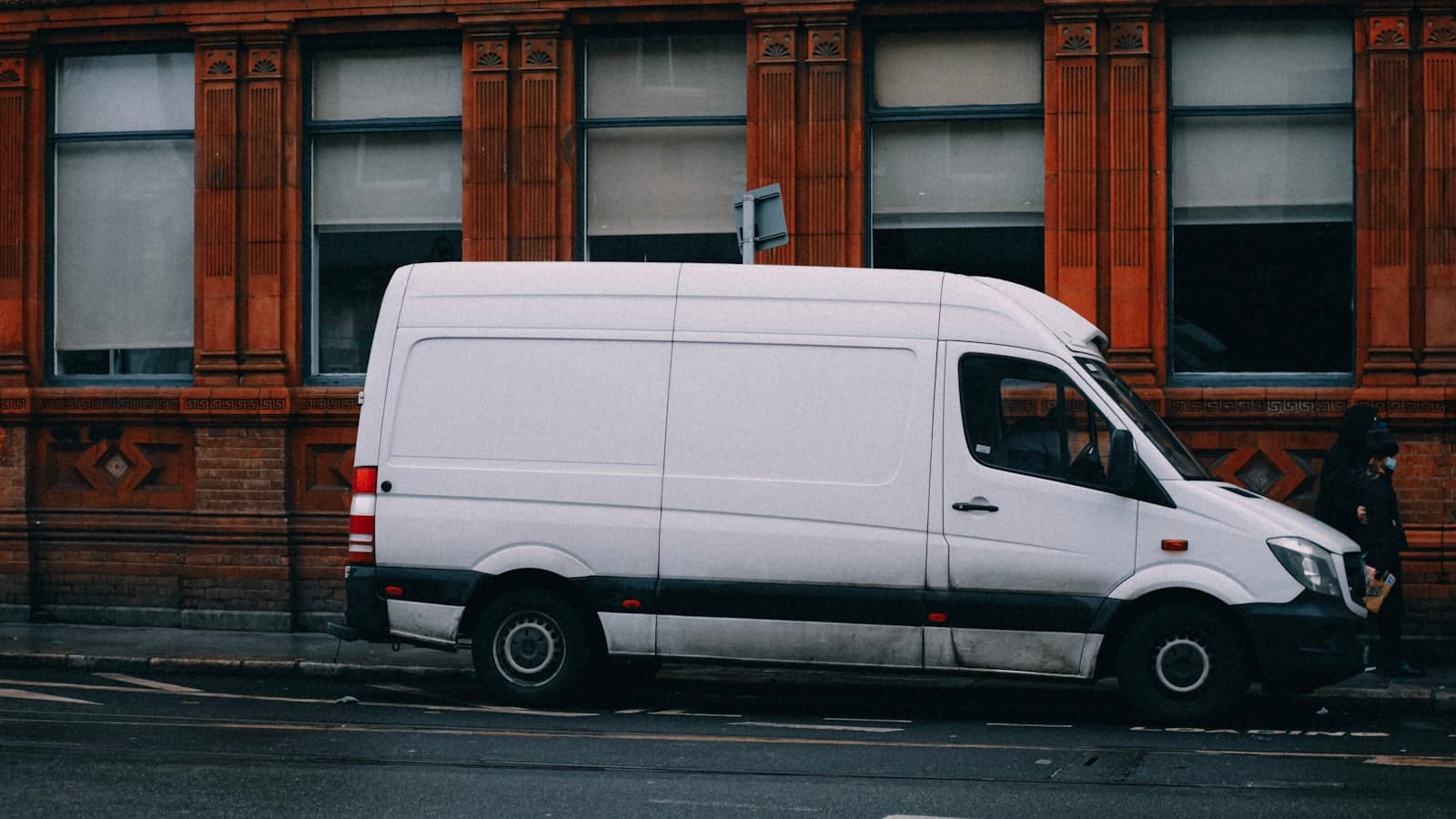
A bakery with wholesale customers has one more area a pastry shop often does not have: daily transport. The vehicle you deliver bread in must be kept clean, and products that need refrigeration must not drop out of the cold chain. Regulation 852/2004 states plainly that the cold chain must not be interrupted.[1] We describe the vehicle requirements and registering it with Sanepid separately in Registering a food delivery vehicle with Sanepid.
- a vehicle cleaning and disinfection log kept up to date
- temperatures in the vehicle's cold compartment, if you carry products with fillings or cream
- clean, washed crates, kept apart from return crates from shops
What an inspection checks in a bakery
The inspection compares the documents with what it sees. Most often it asks for temperature records from the last few days, the cleaning schedule, goods-in records, staff medical certificates, proof of pest control and a description of how you manage allergens. Records filled in once a week “from memory” are obvious straight away: the same handwriting, the same pen and identical values. We write more about the visit itself in Your first Sanepid inspection in a pastry shop, and the rules for a bakery's night shift are the same.
- fridge and cold room temperature records, with a corrective action when a limit is exceeded
- a cleaning schedule and log (also for the slicer, the divider and the vehicle)
- goods-in: who received it, when and in what condition
- staff medical certificates and training[2]
- pest control, especially in the flour storeroom
How to keep HACCP records in a bakery without notebooks
The hardest part of HACCP is not writing the procedure, it is the daily records through the night shift, at weekends and during holidays. In BakePilot the HACCP module keeps them on your phone and computer: equipment with a temperature range, readings with an OK or Alarm status and a description of the corrective action, five ready-made forms (including a cleanliness check sheet, a vehicle cleaning and disinfection log and a vehicle cold compartment temperature sheet), eight GHP/GMP procedures (including goods-in and pest control) and monthly summaries to print or save as PDF. Details in Control forms and GHP/GMP procedures. The HACCP module is in the Mistrzowski (Master) plan. Product allergens are calculated from the recipe in the Profesjonalny (Professional) plan. How all this connects with standing orders, deliveries and delivery notes (WZ) is shown on our bakery software page.
- an equipment temperature log with automatic comparison against the norm
- control forms filled in from a phone, with the “Reviewed” status after the owner checks them
- GHP/GMP procedures with a list of checkpoints
- a monthly summary to print for the inspection
Bakers' most common questions about HACCP
Does a small bakery need HACCP? Yes, the obligation in Article 5 of Regulation 852/2004 applies to every business, but a small business may use simplified procedures.[1][3] Do you need to buy a certificate? No, certification is not required.[3] How many days before opening should you apply to Sanepid? At least 14 days before the planned start.[2] Can records be kept electronically? The law requires documentation showing that the system works, not a specific paper form; what matters is that the records are up to date and available during an inspection.
Sources and footnotes
- [1]Regulation (EC) No 852/2004 on the hygiene of foodstuffs (Article 5, Annex II), Polish language version, EUR-Lex - European Parliament and Council of the EU, 2004link (opens in a new tab)
- [2]Act of 25 August 2006 on food and nutrition safety, consolidated text Journal of Laws 2023 item 1448 (Articles 59, 61-64) (in Polish), ISAP - Sejm of the Republic of Poland, 2023link (opens in a new tab)
- [3]Hazard Analysis and Critical Control Points (HACCP): simplified procedures for small businesses, no certification requirement (in Polish), State Sanitary Inspection (WSSE Katowice), gov.pl, 2024link (opens in a new tab)
- [4]Principles of the HACCP system (the seven principles) (in Polish), National Centre for Nutritional Education, NIZP PZH - PIB, 2023link (opens in a new tab)
- [5]Commission Regulation (EU) 2017/2158 establishing mitigation measures and benchmark levels for the reduction of acrylamide in food (Article 2, Annex II), Polish language version, EUR-Lex - European Commission, 2017link (opens in a new tab)
- [6]Regulation (EU) No 1169/2011 on the provision of food information to consumers (Article 44: non-prepacked food), Polish language version, EUR-Lex - European Parliament and Council of the EU, 2011link (opens in a new tab)
Author: Kamila Kowalska. Last updated: . Spotted a mistake? Write to kontakt@bakepilot.pl and we will correct it and update the date. Editorial policy
How would you rate this article?
Your rating helps us write better content for bakers and pastry chefs.
Loading…