HACCP in a small pastry shop without the paperwork: what you really need in Poland
HACCP makes people think of a thick binder and a fee for a “certificate”. The law requires less than you think. What exactly a small pastry shop or bakery in Poland must have, with the legal basis and practice from our own pastry shop.
The paperwork is a myth: the law requires less than you think
Many pastry chefs put HACCP off, because it makes them think of a thick binder and an invoice for a “certificate”. In practice the obligation is narrower. Article 5 of Regulation (EC) No 852/2004 says it plainly: a food business operator puts in place, implements and maintains a permanent procedure based on the HACCP principles. It is a procedure, not a certificate to hang on the wall.[1] In Poland the rules are implemented by the Act of 25 August 2006 on food and nutrition safety (Journal of Laws 2006 No. 171 item 1225), which defines GHP, GMP and the HACCP system itself.[2] The most important point for a small pastry shop: the Polish State Sanitary Inspection (Sanepid) itself writes that small businesses may use simplified procedures, and there is no obligation to certify the system at all.[3]
- the basis is Article 5 of Regulation 852/2004: a “procedure based on the HACCP principles”, not a certificate[1]
- definitions of GHP / GMP / HACCP: the Polish food and nutrition safety act of 2006[2]
- small businesses may simplify procedures; certification is NOT required[3]
- an inspection checks whether the system really works, not whether you have a nice binder
GHP and GMP first, HACCP after
The order matters. HACCP does not replace hygiene, it stands on it. Good Hygiene Practice (GHP) and Good Manufacturing Practice (GMP) are the foundation: clean hands, clean counters, working fridges, raw ingredients kept apart from finished products, pest control, drinking-quality water. Only on top of that do you build the hazard analysis. If basic hygiene is lacking, no HACCP form will make up for it, and the first thing an inspector will notice is the dirt, not a missing document.
- GHP: hygiene conditions and activities at every stage (washing, disinfection, staff hygiene)
- GMP: production conditions that keep the product safe for its intended use
- HACCP: the layer on top, analyzing hazards and watching the points where something can really go wrong
Which rooms a pastry shop needs: our own as an example
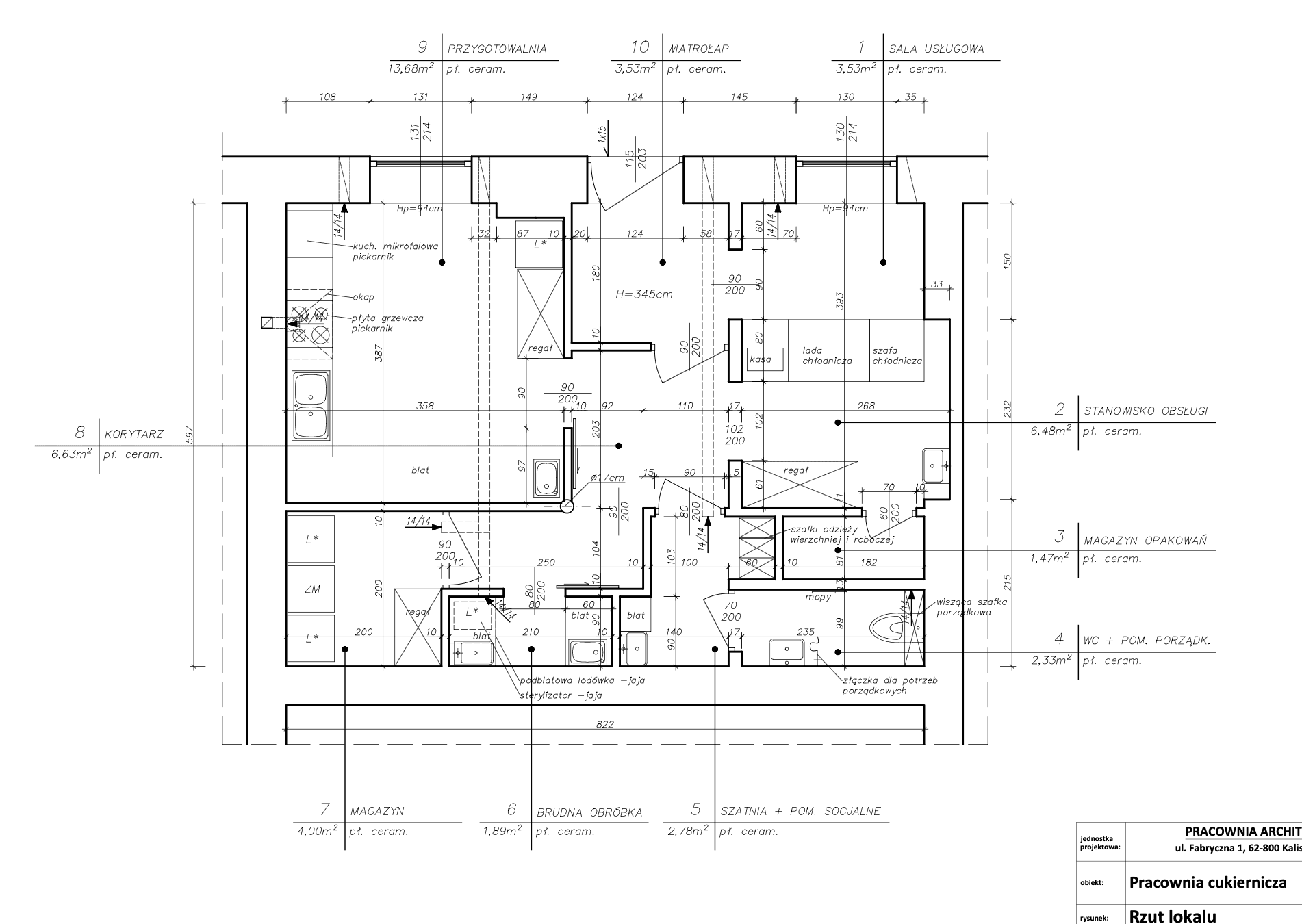
The Polish act does not give a fixed list of square meters. Instead, Annex II to Regulation 852/2004 requires a layout that allows good hygiene, separates the “clean” zone from the “dirty” zone and does not cross the paths of raw ingredients, finished products, waste and staff.[1] This layout is exactly what Sanepid (the Polish sanitary inspection) approves when it signs off the premises. Below is the real floor plan of our pastry shop in Kalisz, which passed the inspection. Look at the corridor (no. 8): it is a CLEAN zone that separates production from the toilet and the cleaning room, so the path “from dirty to clean” never crosses anywhere.
- vestibule and shop floor: the customer area, separated from production
- preparation room (13.68 m² in our case): the heart of the business, where products are made
- dirty processing area: washing and initial preparation of raw ingredients (eggs, unpacking goods)
- raw ingredient storeroom and a separate packaging storeroom, both separated from production
- changing room with a staff room: outdoor clothing and work clothing kept apart
- toilet with a cleaning room: the “dirty” zone, cut off by the corridor
- corridor (clean): the key to the whole layout, it connects the rooms without crossing zones
Sanepid first, construction second: never reverse this order
This is the point where it is easiest to lose a lot of money. Before you spend a single zloty on partition walls, tiles or equipment, agree the room design with Sanepid. If you build it your own way and the inspector then rejects the layout, you rebuild everything, out of your own pocket. Here is how it went for us: we started with one large room of about 50 m². First I drew the layout myself in Kaza Plan, which was free at the time, to show roughly how it should look. A company called “Ania HACCP dla Ciebie” helped us with the expert side. With the finished design we went to Sanepid to confirm it would pass. Only when the inspector accepted the layout did we start building with an architect. Never the other way round.
Agree it with Sanepid BEFORE you build
Putting up walls “by feel” and asking for approval afterwards is the easiest way to an expensive rebuild or a failed inspection. Get the room design approved by Sanepid before you start building.
- 1. Sketch the layout, yourself in a simple program (for example Kaza Plan) or with a designer from the start
- 2. Consult a food technologist or HACCP company (in our case “Ania HACCP dla Ciebie”), so the layout makes sense for your processes
- 3. Agree the design with Sanepid BEFORE you build anything
- 4. Only after approval: build with an architect and a contractor
The seven HACCP principles in plain language
The HACCP system is based on seven principles (as described by the National Centre for Nutritional Education of the Polish National Institute of Public Health).[4] They sound bureaucratic, but in a pastry shop they come down to common sense written down so you can show it to an inspector.
- 1. Hazard analysis: what can cause harm (bacteria in cream, glass, an allergen in the wrong product)
- 2. Identify the critical control points (CCPs): the stages where a hazard is really decided
- 3. Set critical limits: for example the temperature a product must be cooled down to
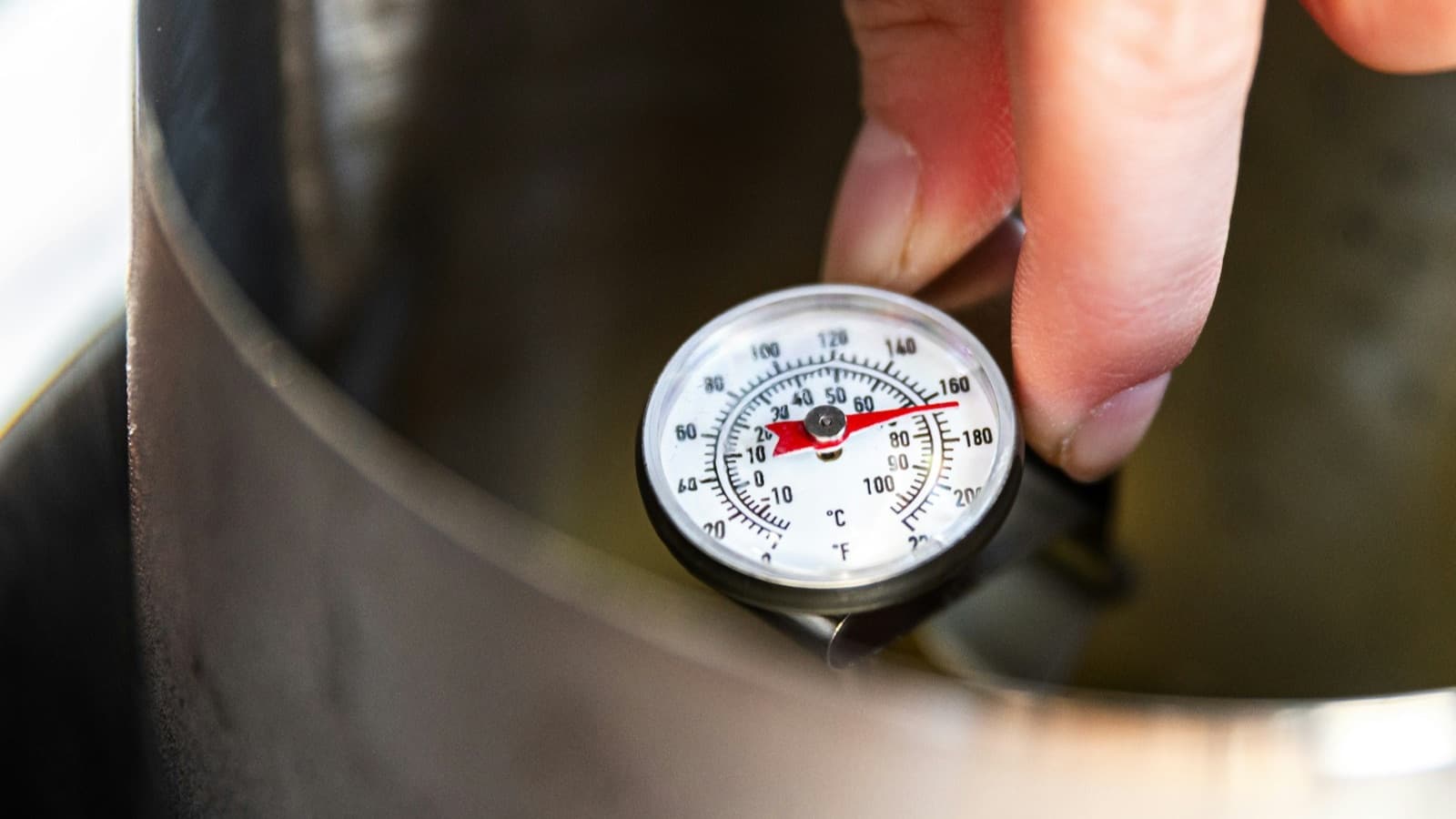
- 4. Monitor the CCPs: measure and record (fridge temperature, cooling time)
- 5. Corrective actions: what you do when a limit is exceeded (dispose of the product, repair the fridge)
- 6. Verification: a periodic check that the system works as it should
- 7. Documentation: records that show you are taking care of all of the above
Critical control points in a pastry shop: specifically
Theory is one thing, but at PyziPyzi HACCP comes down to a few places that really decide about safety. The rest is hygiene and order. It is worth putting your energy where the risk is real, rather than multiplying forms just for the paper.
- cooling creams and fillings made with eggs or cream: the most common real CCP in a pastry shop
- fridge and freezer temperatures: continuous monitoring, not “by eye”
- storing and thawing raw ingredients (eggs, dairy, frozen fruit): dates and conditions
- allergen separation: separate equipment or production order for nuts, gluten and milk
- filled products that are not heat-treated after filling: the highest level of care
What a Sanepid inspection really checks
In our experience, inspectors rarely read the binder page by page. They check whether what you have on paper matches reality. Most often they ask simple things: show me the temperature records from the last few days, show me the cleaning schedule, show me how you separate allergens, show me the best-before dates. If your records are up to date and consistent with what can be seen on site, you are in a good position. The trouble starts when forms are “filled in ahead” or have been empty for a week.
An inspection does not punish you for being small. It punishes you for not being in control of what you do. And a small pastry shop can be kept under control, you just have to record things as they happen, not once a month from memory.
The most common mistakes of small pastry shops
A recurring set of mistakes seen during inspections, which we also hear about from other craft bakers:
- temperature records filled in “in bulk” once a week: it is obvious straight away that they are fiction
- no corrective actions: the fridge showed 12°C and... nothing, no entry about what happened next
- allergens only in the owner's head: no procedure for when someone new joins production
- documentation copied from the internet, describing a business that does not exist (different equipment, different processes)
- no verification: the system was set up 3 years ago and nobody has looked at it since
A HACCP specialist: when a few hundred zloty is money well spent
You are allowed to write your HACCP plan yourself, and for a simple business it can be done properly. But the most common mistake is documentation downloaded from the internet that describes a business you do not have: different equipment, different processes, a different room layout. A professional will match the hazard analysis and critical control points to your production and your floor plan, and that tailored document is what holds up during an inspection. For us it cost about 800 PLN. Compared with a fine, or in an extreme case a decision to stop production, it is the cheapest insurance you can buy.
- a document tailored to your business, not a copied template
- a specialist will point out real CCPs that are easy to miss on your own
- the cost (a few hundred PLN) is nothing compared with a fine or downtime
- you develop the documentation together with the business: a new room, a new line (ice cream, catering) or a new process means updating your HACCP
How to run HACCP without a paper binder
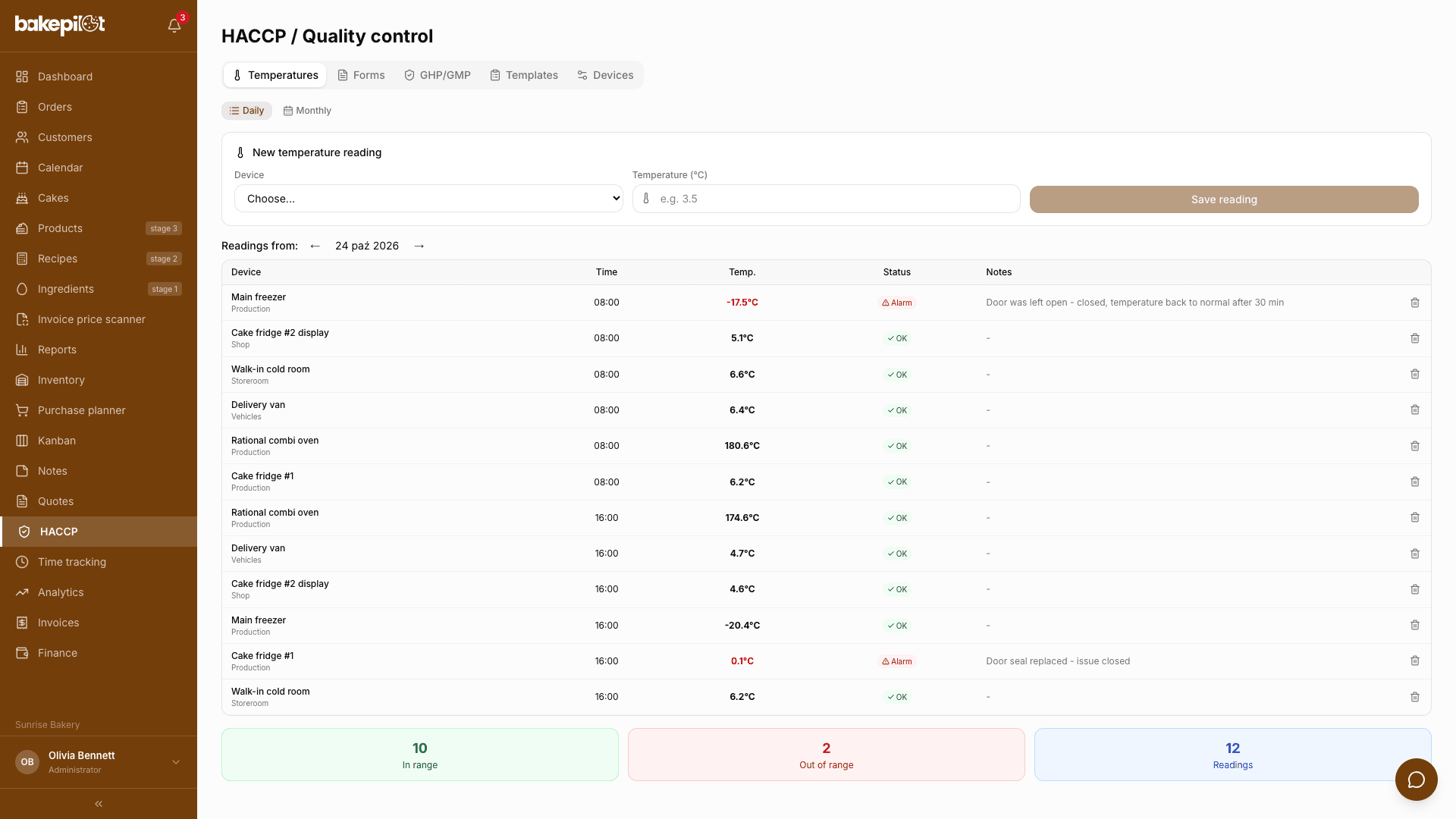
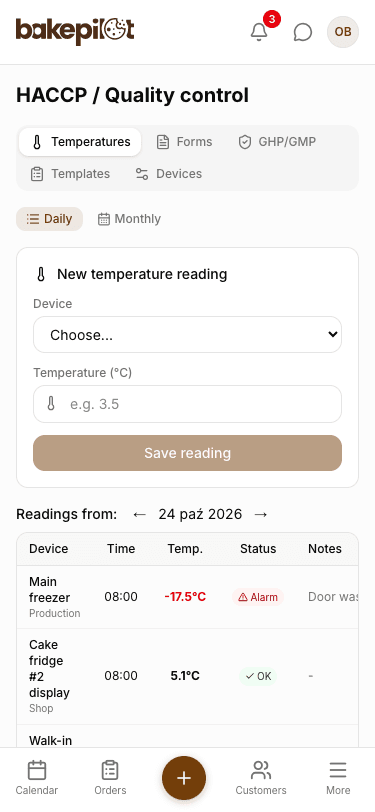
The whole difficulty of HACCP in a small pastry shop is not knowledge, it is consistency. Recording a temperature takes 10 seconds, but it has to be done every day and be at hand when an inspector comes. That is why the HACCP module in BakePilot keeps it on your phone: equipment temperature monitoring with the date and person recorded, ready-made GHP/GMP forms tailored to your business, and a PDF export for the inspection. No folder that always goes missing at the worst moment. Allergens are calculated automatically from the recipe, so a label saying “contains: milk, eggs, nuts” does not depend on memory. It does not free you from thinking, but it takes the paperwork off your mind, the very paperwork that makes people put HACCP off.
Sources and footnotes
- [1]Regulation (EC) No 852/2004 on the hygiene of foodstuffs (Article 5: procedures based on HACCP principles), consolidated version, EUR-Lex - European Parliament and Council of the EU, 2004link (opens in a new tab)
- [2]Act of 25 August 2006 on food and nutrition safety (Journal of Laws 2006 No. 171 item 1225) (in Polish), ISAP - Sejm of the Republic of Poland, 2006link (opens in a new tab)
- [3]Hazard Analysis and Critical Control Points (HACCP): the obligation, simplified procedures for small businesses, no certification requirement (in Polish), State Sanitary Inspection (WSSE Katowice), gov.pl, 2024link (opens in a new tab)
- [4]Principles of the HACCP system (the seven principles) (in Polish), National Centre for Nutritional Education, NIZP PZH - PIB, 2023link (opens in a new tab)
Author: Kamila Kowalska. Last updated: . Spotted a mistake? Write to kontakt@bakepilot.pl and we will correct it and update the date. Editorial policy
How would you rate this article?
Your rating helps us write better content for bakers and pastry chefs.
Loading…