Cake labels in Poland: what must be on them and how to mark allergens
A packaged cake and a cake sold from the display case have different labeling obligations. What must be on the label of a pastry product under Regulation 1169/2011 and Polish rules, how to emphasize the 14 allergens, and when you need a date and a nutrition table, with the legal basis.
First question: packaged or not
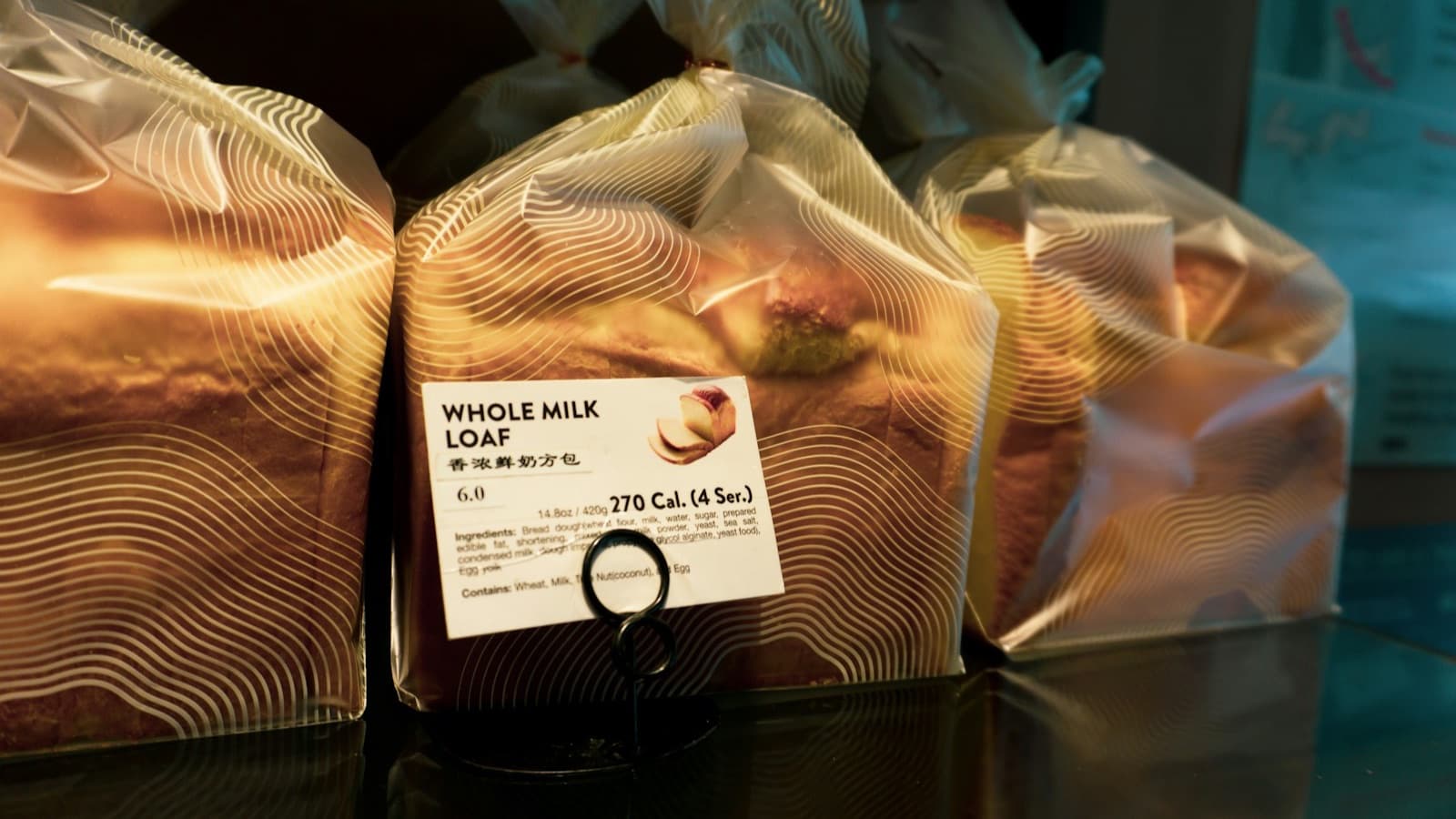
Before you design a label, decide how you sell the product. Regulation (EU) No 1169/2011 treats prepacked food differently from food the customer buys from the display case or that you pack in the shop at their request. For the second group, only allergen information is mandatory under the regulation itself, and the remaining requirements are set by each member state (Article 44(1)).[1] Poland did this in § 19 of the regulation of the Minister of Agriculture and Rural Development on the labeling of particular types of foodstuffs.[2] A cheesecake in a closed box on a shop shelf is a different situation from a slice of cheesecake cut at the counter, even if it is the same bake.
- prepacked product: the full list of information from Article 9 of Regulation 1169/2011[1]
- unpackaged product or packed at the customer's request: allergens always mandatory, the other details under § 19 of the Polish national rules[1][2]
- the business under whose name the product is placed on the market is responsible for the information (Article 8(1))[1]
What must be on the label of a packaged cake
Article 9(1) of Regulation 1169/2011 lists the mandatory particulars.[1] For pastry products eight of them matter in practice. The others (alcohol content, country of origin in special cases, instructions for use) rarely apply to pastry shops. All particulars must be printed legibly: an x-height of at least 1.2 mm, and at least 0.9 mm on packaging whose largest surface is less than 80 cm² (Article 13(2) and (3)).[1]
- the name of the food, for example “Cheesecake with raisins”[1]
- the list of ingredients, headed by a heading that includes the word “ingredients”, in descending order of weight at the time of use (Article 18(1))[1]
- allergens from Annex II, emphasized in the list of ingredients (Article 21)[1]
- the net quantity[1]
- the date of minimum durability or the use-by date[1]
- special storage conditions, for example the temperature for a cream cake[1]
- the name or business name and address of the producer[1]
- the nutrition declaration, unless the product is exempt (see below)[1]
Cake from the display case and cake packed in front of the customer
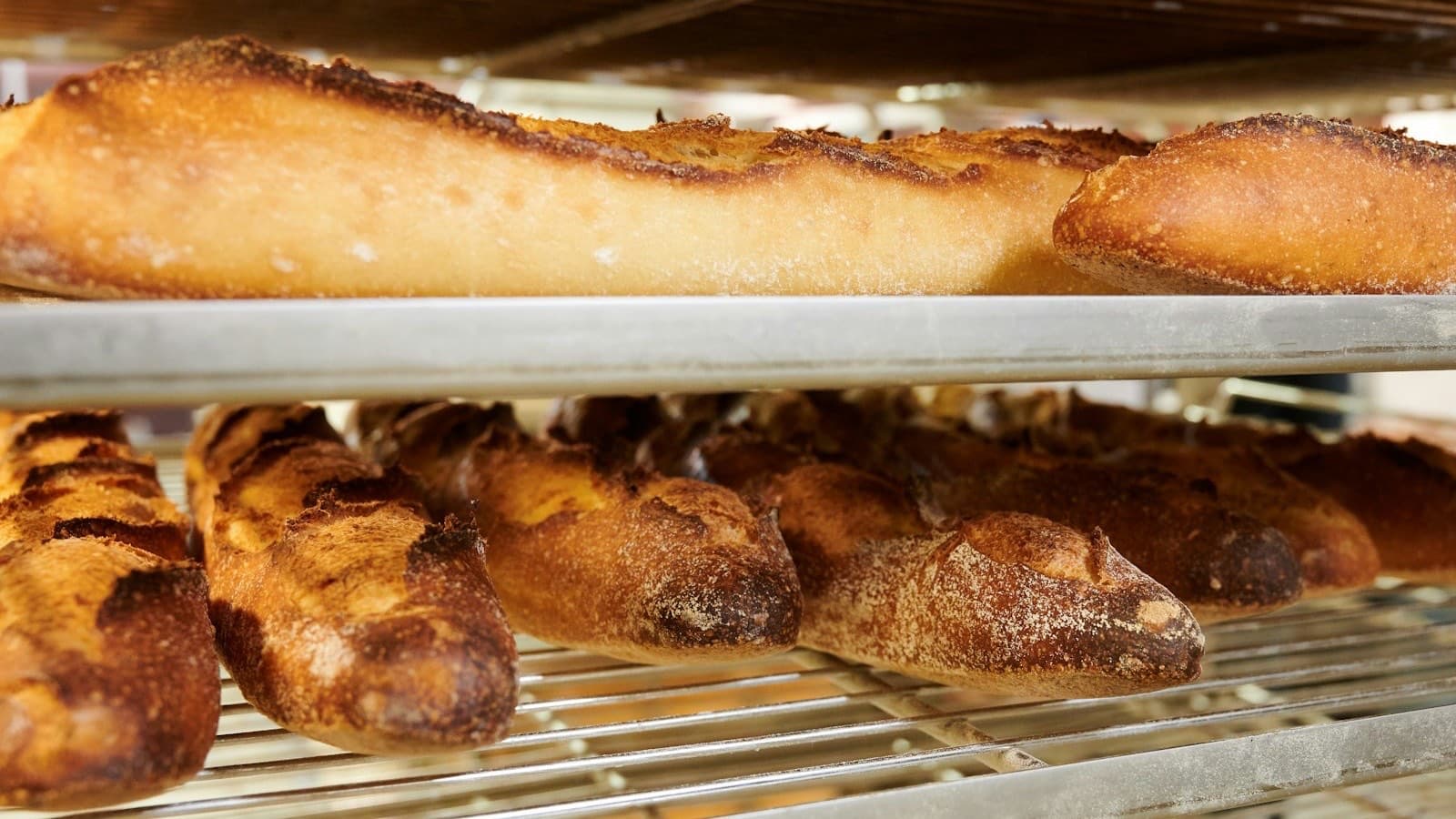
When you sell a product unpackaged, pack it on the sales premises at the customer's request or for immediate sale, § 19(1) of the Polish national rules requires the name of the foodstuff, the name of the producer and the list of ingredients including allergens.[2] For bread you also add the unit weight and, if applicable, the information that it was “made from frozen dough” or “from deep-frozen dough”. This information is given at the point of sale on a sign relating to the product, or in another way, in a place directly accessible to the customer (§ 19(2)).[2] In a pastry shop the simplest solution is a card by each item in the display case, or a binder with product sheets at the till, as long as it is up to date and the customer has access to it.
Allergens at the counter are not “good practice”, they are an obligation
Allergen information is mandatory for non-prepacked food too (Article 44(1)(a) of Regulation 1169/2011).[1] A sales assistant saying “I don't think there are nuts in it” is not enough. The information must come from the recipe and be available on site.
- the name of the product[2]
- the name of the producer (business name or first and last name)[2]
- the list of ingredients with allergens (in line with Articles 18-21 of Regulation 1169/2011)[2]
- for bread: the unit weight and information about frozen dough, if used[2]
- form: a sign by the product or another way directly accessible to the customer[2]
The 14 allergens you must declare
Annex II to Regulation 1169/2011 lists fourteen groups of substances or products causing allergies or intolerances.[1] They also apply to ingredients used in manufacturing and still present in the finished product, even in an altered form (Article 9(1)(c)).[1] In a pastry shop you will most often meet the first ones on the list, but it is worth knowing them all, because creams, glazes, sprinkles and dried fruit and nuts from wholesalers can bring in an allergen nobody thinks about when baking.
| No. | Allergen | Where it appears in a pastry shop |
|---|---|---|
| 1 | cereals containing gluten (including wheat, rye, barley, oats, spelt)[1] | flour, sponge, shortcrust, sprinkles |
| 2 | crustaceans[1] | rarely |
| 3 | eggs[1] | sponge, meringue, creams |
| 4 | fish[1] | rarely |
| 5 | peanuts[1] | peanut butter, sprinkles, chocolate with inclusions |
| 6 | soybeans[1] | lecithin in chocolate and glazes, check the supplier's label |
| 7 | milk (including lactose)[1] | butter, cream, mascarpone, cream cheese |
| 8 | nuts (almonds, hazelnuts, walnuts, cashews, pecans, Brazil nuts, pistachios, macadamia)[1] | pralines, marzipan, creams, decorations |
| 9 | celery[1] | rarely |
| 10 | mustard[1] | rarely |
| 11 | sesame seeds[1] | sprinkles, bread |
| 12 | sulfur dioxide and sulfites above 10 mg/kg or 10 mg/l[1] | check the labels of dried fruit and additives from your supplier |
| 13 | lupin[1] | rarely |
| 14 | mollusks[1] | rarely |
How to emphasize allergens in the ingredient list
This is the most common mistake on labels from small bakeries. The regulation requires the allergen to be indicated in the list of ingredients, with a clear reference to its name from Annex II, and emphasized through a typeset that clearly distinguishes it from the rest of the list, for example by font, style or background color (Article 21(1)).[1] A sentence like “Contains: milk, eggs” under the ingredients does not replace this. The wording with “contains” is meant for products that have no list of ingredients at all.[1] If several ingredients come from one allergen (butter and cream from milk), you emphasize it for each of them.
- correct: Ingredients: WHEAT flour, BUTTER, sugar, EGGS, cream (from MILK)
- wrong: Ingredients: flour, butter, sugar, eggs, cream. Contains: gluten, milk, eggs
- bold or capital letters must be visible on the printout, also on a thermal printer
- a “may contain” note about possible cross-contamination does not replace emphasizing the allergens present in the recipe
The date on the label and the 24-hour exception
The date of minimum durability takes the form “Best before …” when the date includes the day, and consists of the day, the month and possibly the year, in uncoded form (Annex X point 1).[1] For food that is highly perishable and may pose a danger to health after a short time, the date of minimum durability is replaced by the use-by date (Article 24(1)).[1] An important exception for pastry shops: a date of minimum durability is not required for bakers' or pastry cooks' wares which, given their nature, are normally consumed within 24 hours of manufacture.[1] Whether a product needs a use-by date and how long it should be is your decision as the producer, based on your HACCP plan, the regulation does not decide it for you.
- “Best before: 14.10” is a date of minimum durability[1]
- a use-by date for highly perishable products, for example with a cream-based filling[1]
- products normally consumed within 24 hours of manufacture: no date of minimum durability[1]
- give the storage conditions next to the date if the shelf life depends on them[1]
Nutrition information: when you need it
The mandatory nutrition declaration covers energy value and the amounts of fat, saturates, carbohydrate, sugars, protein and salt (Article 30(1)), and energy is given in kilojoules and kilocalories (Annex XV).[1] However, Annex V exempts, among others, food, including handcrafted food, directly supplied by the manufacturer of small quantities of products to the final consumer or to local retail establishments directly supplying the final consumer (point 19), and food in packaging whose largest surface is less than 25 cm² (point 18).[1] The regulation does not say from what quantity it stops being “small”, so when supplying chains or shops in other towns it is worth agreeing this with Sanepid (the Polish sanitary inspection) or with the buyer.
- scope: energy (kJ and kcal), fat, saturates, carbohydrate, sugars, protein, salt[1]
- exemption: small quantities supplied directly to customers or to local shops (Annex V point 19)[1]
- exemption: packaging whose largest surface is under 25 cm² (Annex V point 18)[1]
- if you give nutrition information voluntarily, it must also be accurate
Label ingredients calculated from the recipe
Most label mistakes come from copying the ingredients from memory. The recipe changes (a different cream, a new sprinkle, a substitute chocolate from another supplier), and the label stays old. It is safer to keep allergens with the ingredients and calculate them from the recipe than to add them by hand for every product. Two rules from practice: allergens of sub-recipes (cream, sponge, filling) count the same as those of direct ingredients, and after every change of supplier you need to check their label, because “the same” product from another brand can have different allergens.
- allergens assigned to the ingredient, not entered separately for every product
- sub-recipes included in the product's allergens
- a change of supplier = checking the allergens and ingredients on their label
- a label printed from current data, not from a file six months old
How we do it in BakePilot
In BakePilot you fill in the label data in the product form, in the expandable “Ingredients and allergens” section: description, ingredients, allergens, net quantity, shelf life in days, “Date type on the label” and storage conditions. On the ingredient card you mark each of the 14 allergens as “Contains”, “Traces” or “None”, and the “Save ingredients from the recipe” and “Allergens from the recipe” buttons on the product card collect the ingredients and allergens from the recipe's ingredients, including sub-recipes; the allergens are saved as text along the lines of “Contains: gluten, eggs, milk. May contain traces of: nuts.”. You open the label with the “Generate label” icon next to the product in the list. The label itself is printed in Polish, as food sold in Poland requires. The ingredient list sits under the heading “Składniki:” (Ingredients:), and the Annex II allergens in it are emphasized in bold and capital letters (mąka PSZENNA, MASŁO, JAJA, that is WHEAT flour, BUTTER, EGGS), also when you entered the ingredients by hand; the “Zawiera: …” (Contains: …) line stays under the list as additional information. When printing you enter the “Packing date” (today by default), and the label prints “Najlepiej spożyć przed: 15.10.2026” (Best before) or “Należy spożyć do: 15.10.2026” (Use by) according to the date type chosen on the product and the shelf life in days. The nutrition table gives, per 100 g, energy in kJ and kcal, fat, of which saturates, carbohydrate, of which sugars, protein and salt, calculated from the values entered for the ingredients and related to the batch weight from the recipe. Plus the net quantity, storage conditions and the producer's details with the NIP (Polish tax ID). You print on an A4 sheet (1, 2 or 3 columns) or on a label printer in sizes from 57 × 40 to 100 × 150 mm; you set the format and whether the table is on by default in Settings, on the “Product labels” tab, and you can turn the table off for a single printout on the label page. Labels, allergens from the recipe and nutrition values of ingredients are in the Profesjonalny (Professional) plan; entering a product's allergens by hand is also available in Podstawowy (Starter). The fields are described in Adding products, and label printing on the Product labels page.
What stays on your side
The app does not invent data it does not have. You enter the nutrition values of ingredients yourself (per 100 g, from the supplier's label). Without them the table is incomplete, and the label page lists the missing ingredients. For “100 g” to refer to the finished product, the recipe must have a “Batch weight (kg)” entered that matches the weight of the ingredients (from 60% to 105% of their weight). Without it the values are calculated per 100 g of raw ingredients and the label page warns you about it. In that case add the weight or turn the table off, which Annex V point 19 allows for small quantities supplied directly to customers.[1] You decide whether a product needs a use-by date and how long it should be, the regulation does not settle it, and a product with no shelf life entered gets a label without a date, with a warning on screen. A product sold unpackaged needs neither a date nor a table, but it must always have allergen information.[1][2]
- allergens on the ingredient: “Contains”, “Traces”, “None” for each of the 14 allergens
- “Allergens from the recipe” and “Save ingredients from the recipe” include the ingredients of sub-recipes
- ingredients without manual entry: the recipe's ingredients from the largest amount, using the ingredient's “Name on the label” or “Composition as on the label”
- the heading “Składniki:” (Ingredients:), allergens emphasized in the list in bold and capital letters, the “Zawiera: …” (Contains: …) line as an extra
- a date in day.month.year format calculated from the packing date: “Najlepiej spożyć przed” (Best before) or “Należy spożyć do” (Use by)
- nutrition values per 100 g of finished product (based on the batch weight from the recipe), energy in kJ and kcal
- print or save to PDF with the “Print / save PDF” button, choosing the number of labels
Frequently asked questions about labels in a pastry shop
Does cake from the display case need a label? It needs allergen information, and under § 19 of the Polish national rules also the name, the producer and the list of ingredients, given on a sign or in another way accessible to the customer.[1][2] Is it enough to write “Contains: gluten, milk” under the ingredients? No, if there is a list of ingredients, the allergen must be emphasized in the list itself.[1] Does a small pastry shop have to print a nutrition table? No, if it supplies small quantities of products directly to customers or to local shops (Annex V point 19).[1] Does a cake for one day need a date? Products normally consumed within 24 hours of manufacture do not need a date of minimum durability, but highly perishable products need a use-by date.[1]
Sources and footnotes
- [1]Regulation (EU) No 1169/2011 on the provision of food information to consumers (Articles 8, 9, 13, 18, 21, 24, 30, 44, Annexes II, V, X, XV), Polish language version, EUR-Lex - European Parliament and Council of the EU, 2011link (opens in a new tab)
- [2]Regulation of the Polish Minister of Agriculture and Rural Development of 23 December 2014 on the labeling of particular types of foodstuffs, Journal of Laws 2015 item 29 as amended (§ 19: non-prepacked food) (in Polish), ISAP - Sejm of the Republic of Poland, 2015link (opens in a new tab)
Author: Kamila Kowalska. Last updated: . Spotted a mistake? Write to kontakt@bakepilot.pl and we will correct it and update the date. Editorial policy
How would you rate this article?
Your rating helps us write better content for bakers and pastry chefs.
Loading…