
KSeF for pastry shops and bakeries in Poland: receipts, invoices for businesses and wholesaler invoices
When pastry shops and bakeries in Poland must issue invoices in KSeF (Poland's National e-Invoicing System), what happens with receipts and invoices for receipts, how to receive invoices from wholesalers and what changes on January 1, 2027. Based only on materials from the Polish Ministry of Finance.
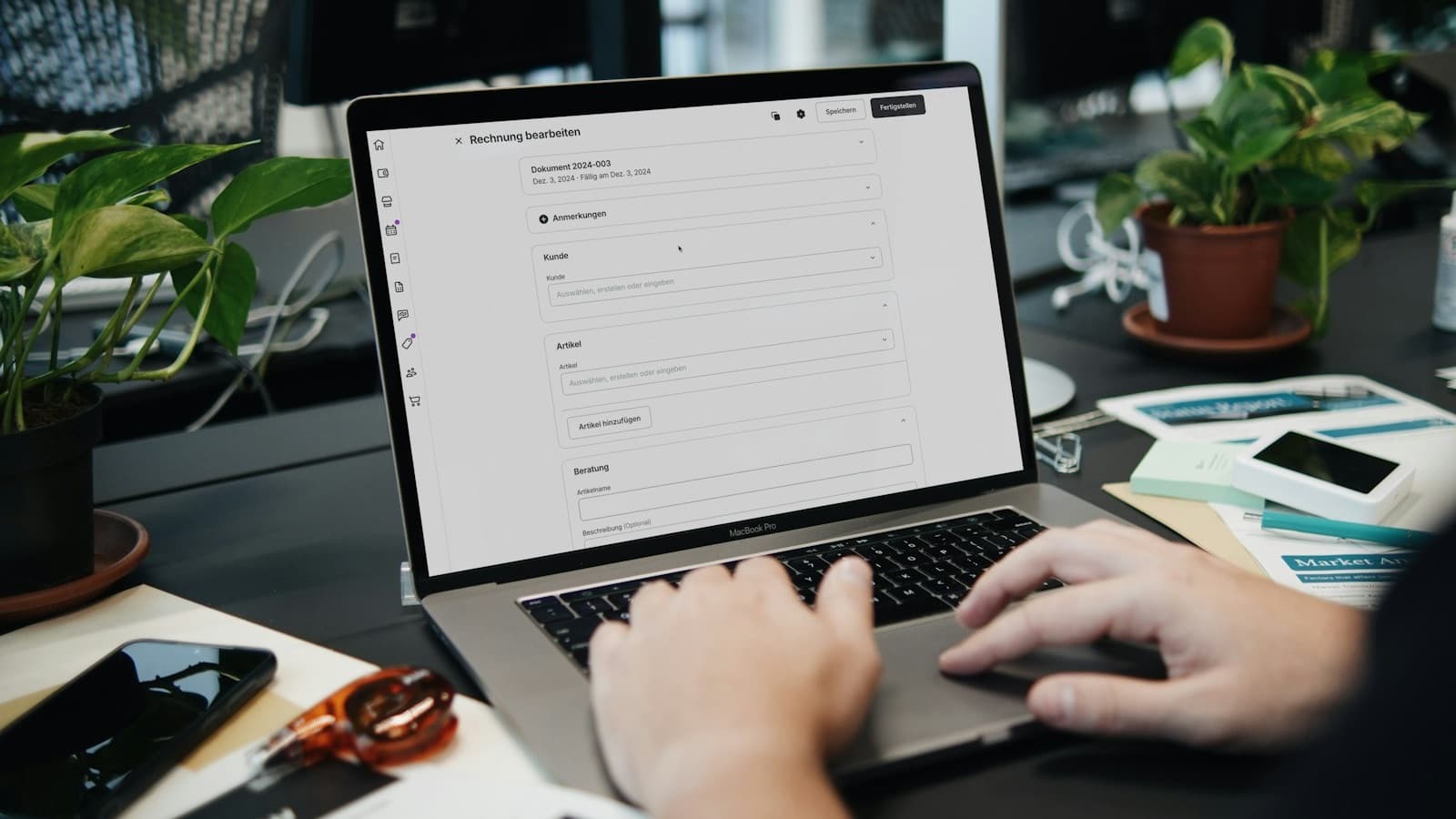
What KSeF changes for pastry shops and bakeries
KSeF (Krajowy System e-Faktur, Poland's National e-Invoicing System) is a Polish Ministry of Finance system through which invoices between businesses are issued and received in one structured format. For pastry shops and bakeries in Poland it means three changes. You issue invoices for business customers (cafes, shops, hotels, companies ordering catering) in KSeF. You receive invoices from wholesalers and suppliers in KSeF. And a mistake on an invoice that has been sent can no longer be fixed by editing, only with a corrective invoice.[1][5] Counter sales to individual customers are documented with a fiscal receipt, as before.
When a pastry shop must issue invoices in KSeF
The obligation came in stages. From February 1, 2026 it covered companies whose sales in 2024 exceeded 200 million PLN, and receiving invoices in KSeF became mandatory for everyone.[1][2] From April 1, 2026 all other businesses issue invoices in KSeF, which means practically every pastry shop and bakery.[1] Until the end of 2026, however, two exceptions apply that are very important for small businesses, and from January 1, 2027 penalties start to apply.
| Date | What happens |
|---|---|
| February 1, 2026 | obligation to issue for companies with sales over 200 million PLN in 2024; obligation to receive invoices in KSeF for everyone[1][2] |
| April 1, 2026 | obligation to issue invoices in KSeF for all other businesses[1] |
| until December 31, 2026 | invoices outside KSeF when the sales documented by them in a month do not exceed 10,000 PLN gross; invoices from a cash register, including a receipt with the buyer's NIP up to 450 PLN[1][3] |
| January 1, 2027 | end of the exceptions; financial penalties under Article 106ni of the Polish VAT Act start to apply[3][4] |
The 10,000 PLN per month exception
Until the end of 2026 a business may issue paper or electronic invoices outside KSeF if the total value of sales (including tax) documented by such invoices in a given month does not exceed 10,000 PLN.[1] What counts is the value of sales documented by invoices issued outside KSeF in that month, not the pastry shop's total takings. So a small pastry shop that issues a few invoices a month to businesses can still work the old way this year. From January 1, 2027 this exception disappears.[3]
Do not leave it until December
If you use the 10,000 PLN exception or invoices from the cash register, from January 2027 you will issue invoices in KSeF anyway, and penalties start on the same day.[4] Practice KSeF access and your first invoice in the autumn, not in the last week of the year.
Receipts, invoices for receipts and customers with a NIP
Invoices issued to a private individual who does not run a business are not covered by the KSeF obligation; they can be issued in KSeF voluntarily.[2] When a customer at the counter gives a NIP (Polish tax ID), because they are buying a cake for a company party, things are different. Until the end of 2026 invoices can be issued using cash registers, and a receipt with the buyer's NIP up to 450 PLN can be treated as a simplified invoice.[1][3] From January 1, 2027 this loophole closes and an invoice for a business will have to be issued in KSeF. That is why it is worth agreeing in your team now who issues invoices for customers with a NIP and with which tool.
Wholesaler invoices: you already receive them in KSeF
Receiving invoices in KSeF has been mandatory since February 1, 2026.[2] An invoice is considered received at the moment the system assigns it a number, the recipient does not have to accept it.[3] An important practical consequence: KSeF does not send notifications about new invoices, so your software or a person in the company must check for them.[3] For a pastry shop this is good news. A wholesaler invoice in KSeF has items, quantities and prices as data, so you do not need to retype or photograph it to update ingredient prices and recipe costs.
A mistake on an invoice: only a correction
Once accepted by KSeF, an invoice becomes a document and cannot be changed. If there is a mistake, you must issue a corrective invoice.[5] In a pastry shop the most common mistakes are a wrong quantity in a wholesale order, a wrong price after a price list change and a wrong customer NIP. So it is worth checking the invoice preview before sending and keeping regular customers' details in one place, rather than entering them from scratch every time.
Do you need paid software for KSeF?
No. The Polish Ministry of Finance provides the free KSeF Taxpayer Application and the KSeF mobile app, and KSeF can also be used through e-mikrofirma in the e-Tax Office (e-Urzad Skarbowy).[3] To log in you need a Trusted Profile (Profil Zaufany), a qualified signature, a qualified seal, a token or a KSeF certificate.[3] The free tool is enough if you issue a few invoices a month and have time to enter them by hand. Sales software makes sense when an invoice should be created from what you already have recorded: from an order, from goods handed over to shops or from a wholesale price list.
When KSeF is down: offline and failure modes
The rules provide special modes. In offline24 mode the invoice must be sent to the system by the next business day at the latest. During a KSeF maintenance break, invoices are sent at the latest the day after it ends, and in the event of a system failure you have 7 business days from its end.[3] For a bakery that delivers bread to shops with an invoice in the morning this matters: no connection does not stop sales, but sending the invoices later has to be part of the day's plan.
A checklist for the end of 2026
If you already issue invoices in KSeF, just check that everything works. If you still use the exceptions, the list below lets you move to KSeF without stress in January.
- 1. Decide who in the company logs in to KSeF and with which method (Trusted Profile, signature, certificate)
- 2. Check whether your accountant has access to your invoices in KSeF and to what extent
- 3. Decide which tool you issue invoices in: the free one from the Ministry of Finance or the software you use for orders
- 4. Complete your business customers' details (name, NIP, address) in one place
- 5. Agree with your team what you do when a customer at the counter gives a NIP after January 1, 2027
- 6. Decide who fetches purchase invoices from KSeF and how often
- 7. Issue a test invoice and a correction in the autumn, so you do not learn it with your first real mistake
KSeF in BakePilot
In BakePilot invoices and KSeF are in the Mistrzowski (Master) plan. You issue an invoice manually, from an order or in bulk from delivery notes (WZ), then send it to KSeF from the invoice card and check the status, KSeF number and UPO (official receipt confirmation). You connect to KSeF with a three-step wizard: the app prepares a file, you sign it with your Trusted Profile on gov.pl, and the KSeF certificate is issued and renewed automatically (KSeF integration step by step). You fix a mistake with a corrective invoice, including a correction to zero for a wrong NIP. Invoices from wholesalers are fetched from KSeF automatically once a day or with the “Fetch now” button, and go to the price scanner as a proposal of ingredient price changes, which you accept (KSeF cost invoices). One limitation: sending to KSeF works only for invoices in Polish zloty (PLN). How invoices connect with orders, recipes and inventory is shown on our pastry shop software page.
- an invoice from an order and in bulk from delivery notes (WZ)
- a KSeF certificate with a Trusted Profile, renewed automatically
- sending statuses, the KSeF number and UPO on the invoice card
- corrective invoices sent to KSeF
- wholesaler invoices from KSeF update ingredient prices after your approval
Sources and footnotes
- [1]Legal basis and key KSeF deadlines (in Polish), Polish Ministry of Finance - ksef.podatki.gov.pl, 2026link (opens in a new tab)
- [2]Scope of mandatory KSeF (in Polish), Polish Ministry of Finance - ksef.podatki.gov.pl, 2026link (opens in a new tab)
- [3]KSeF for sole traders and SMEs: questions and answers (in Polish), Polish Ministry of Finance - ksef.podatki.gov.pl, 2026link (opens in a new tab)
- [4]Reply of the Polish Ministry of Finance of February 8, 2026 to parliamentary question no. 14720 (penalties under Article 106ni of the VAT Act from January 1, 2027) (in Polish), Sejm of the Republic of Poland, 2026link (opens in a new tab)
- [5]Will it be possible to edit an invoice in case of a mistake? (in Polish), Polish Ministry of Finance - ksef.podatki.gov.pl, 2026link (opens in a new tab)
Author: Patryk Kowalski. Last updated: . Spotted a mistake? Write to kontakt@bakepilot.pl and we will correct it and update the date. Editorial policy
How would you rate this article?
Your rating helps us write better content for bakers and pastry chefs.
Loading…